Search for a recipe on this Blog

Translate

Showing posts with label Rice-Pasta-Potato/Nasi-Pasta-Kentang. Show all posts

Saturday, July 22, 2023

Nasi Pilaf Sayuran Dengan Dada Ayam Goreng à la Turki (Vegetable Rice Pilaf With Turkish Style Pan-Fried Chicken Breast)


In Indonesian & English (the English version is below the recipe written in Indonesian)


Bahan

Bahan nasi Pilaf:

  • 300 gr Beras bulir panjang/Basmati, ½ sm Garam
  • 40 gr Mentega, 4 sm Minyak sayur, 1 Daun salam
  • 1 st Jintan, 500-550 ml Kaldu ayam/-sayuran
  • 1 st Kunyit bubuk*, ½ Bawang bombay-cincang
  • 2 Bawang putih-cacah, ½ st Kayu manis bubuk
  • 250 gr Sayuran (Jagung, Wortel, Buncis, dll)

Bahan ayam:

  • 3 belahan Dada ayam, 6 sm Minyak sayur

Bahan perendam ayam: aduk semua hingga rata

  •  st Garam, 1 st Thyme, ¾ sm Air nipis
  • 1 st Kunyit bubuk, ½ st Jintan bubuk
  • 150 ml Susu, 1 st Cabai/Paprika asap bubuk
  • 1 st Bawang putih bubuk, 1 st Lada bubuk


Cara membuat

  • Lap ayam hingga kering. Iris tiap belahan dada ayam secara horizontal menjadi 2 belah dengan pisau tajam. Pastikan untuk menjaga posisi pisau tetap paralel terhadap talenan agar potongan fillet rata. Masukkan ke dalam mangkuk/kantung plastik lalu siram dengan bahan perendam ayam. Aduk hingga ayam tersaput rata dengan perendamnya. Tutup mangkuk atau rapatkan plastik & simpan di kulkas selama 1 jam.
  • Sementara itu, masak nasi Pilaf. Panaskan minyak sayur di pan dalam dengan api sedang. Beri mentega & lelehkan. Tumis bawang bombay hingga layu. Beri beras, bawang putih & bumbu2. Masak & aduk diantaranya selama 3-4 menit. Tuangi kaldu. Aduk lalu tutup pan & masak. Setelah mendidih, aduk masuk sayuran (saya menggunakan jagung, bayam cincang, wortel & buncis). Tutup & kecilkan api ke paling kecil. Masak nasi hingga semua cairan terserap (20-25 menit). Cicipi nasi, jika masih agak mentah, tambahkan sedikit air & tutup lagi selama 5-10 menit (hingga nasi matang). Cicipi, matikan api & tutup pan selama 5-10 menit.
  • Di pan/wajan, panaskan minyak sayur di atas api sedang. Keluarkan ayam dari saus perendam. Masak ayam di salah satu sisinya selama ± 4 menit (tergantung ketebalan ayam). Balik ayam & masak lagi selama 3-4 menit (sampai matang).
  • Angkat dari pan & istirahatkan di piring saji selama 5 menit. Sajikan ayam dengan nasi Pilaf.

* Anda dapat mengganti kunyit bubuk dengan 0.625 gr Saffron (bumbu ini mahal ya). Giling saffron lalu campurkan dengan ½ cup air panas. Tuang ke pan dalam bersamaan dengan kaldu. Atau dapat juga tanpa menggunakan kunyit/saffron, nasi dibiarkan berwarna putih saja.


Ingredients

Rice Pilaf ingredients:

  • 300 gr long grain Rice, 4 tbsp Vegetable oil
  • 40 gr Butter, 500-550 ml Veggie/Chicken Broth
  • 2 Garlic cloves-minced, ½ tbsp Salt, 1 Bay leaf
  • 1 tsp ground Turmeric*, ½ an Onion-chopped
  • 1 tsp Cumin, ½ tsp ground Cinnamon
  • 250 gr Vegetables (Corn, Carrot, etc)

Chicken ingredients:

  • 3 Chicken breast halves, 6 tbsp Vegetable oil

Chicken marinade: whisk to combine it well

  •  tsp Salt, 1 tsp Thyme, ¾ tbsp Lime juice
  • 1 tsp Turmeric powder, ½ tsp ground Cumin
  • 150 ml Milk, 1 tsp Cayenne/Smoked paprika
  • 1 tsp Garlic powder, 1 tsp ground Pepper


Directions

  • Pat the chicken breasts dry. With a sharp knife, cut each chicken breast horizontally into 2 fillets. Make sure to keep your knife parallel to the board to ensure the fillets are even. Put them in a bowl/plastic Zip-lock bag & then pour in the marinade. Toss until the chicken is evenly coated in the marinade. Cover the bowl/seal the plastic & refrigerate them for 1 hour.
  • Meanwhile, cook the rice pilaf. Preheat vegetable oil in a deep skillet over medium heat. Add in butter & let it melt. Sauté the onion until it wilts. Put in the rice, garlic & other seasonings. Cook & stirring it in between for 3-4 minutes. Pour in the broth; stir to combine it well. Cover the skillet. After it starts to boil, stir in vegetables (I‘m using canned corn, chopped spinach, carrot & green beans). Cover & reduce the heat to the lowest. Cook until the liquid has all been absorbed (20-25 minutes). Taste the rice, if it‘s still a bit raw, you could add in some water & then cover; cook for 5-10 minutes (until the rice is tender). Taste, turn off the heat & cover it for 5-10 minutes.
  • In a skillet, preheat the vegetable oil over medium heat. Remove chicken from the marinade. Cook the chicken on one side for ~ 4 minutes (depends on how thick your fillet is). Flip it over & cook for another 3-4 minutes (until cooked through).
  • Remove from the pan & let it rest in serving plate for 5 minutes. Serve pan fried chicken breast with vegetable rice Pilaf.

* You could substitute it with 0.625 gr Saffron threads (more expensive herb). Grind saffron first & then add it to ½ cup of hot water. Pour it into the skillet together with the broth. Or you could just ommit using the turmeric or saffron, the rice will stay white.

Monday, March 22, 2021

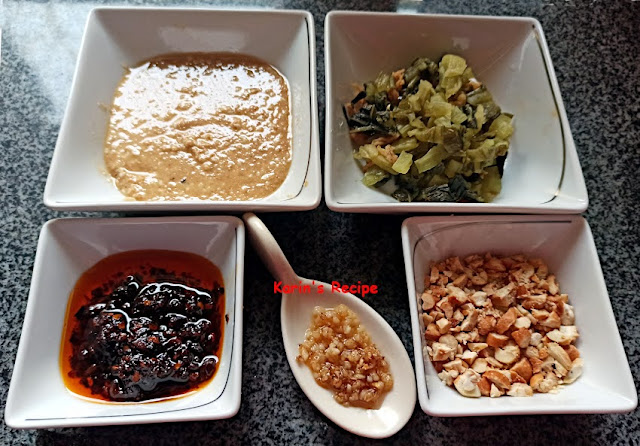
Mie Dan Dan (Dan Dan Noodles)


In Indonesian & English (the English version is below the recipe written in Indonesian)

Bahan

Minyak Cabai Pedas Sichuan: (dapat beli jadi kalau ada)

  • 600 ml Minyak, 2 Daun bawang-potong 2, 1 st Cengkeh
  • 5 iris Jahe, 10 cm Kayu manis, 3 Kapulaga, 1 st Garam
  • 2 Daun salam, 3 Bawang putih tanpa kupas, 3 Pekak
  • 1½ tsp Lada Sichuan/Andaliman, ¼ cup Wijen
  • 1 cup Cabai kering giling kasar

Daging:

  • 400 gr Daging babi (sapi/ayam) giling/cacah dng 50% lemak
  • 2 Bawang putih-cacah, 1 st Jahe cincang, 1 sm Minyak
  • ½ sm Saus Tianmian/Saus hoisin, st Saus soya
  • sm Arak masak/Dry sherry, Lada hitam

Pasta Wijen: (dapat beli jadi kalau ada)

  • ½ st Gula, sejumput Garam, 2 sm Minyak wijen
  • 2 st Biji wijen+1 genggam Kacang-sangrai

Bahan lain:

  • 2 Daun bawang-iris, Kacang cincang sangrai, Minyak
  • 6 Bawang putih-cacah, 1½-3 st Bubuk lada Sichuan
  • 6 sm Saus soya pekat, Baby pak choy/Sawi hijau
  • 6 porsi Mie telur, Air/Kaldu-untuk memasak mie
  • st Gula, 6 sm Cuka hitam Cina/Cuka Balsamic
  • 6 sm Sui mi ya cai *


Cara membuat

  • Minyak cabai pedas Sichuan: Sangrai lada Sichuan di pan selama 1-2 menit di api sedang sampai wangi (jangan hangus). Angkat dari pan, tumbuk dengan ulekan/grinder hingga menjadi bubuk tetapi tidak terlalu halus. Sisihkan. Tuang minyak di panci, beri jahe, daun bawang, kayu manis, bawang putih, kapulaga, cengkeh, pekak & daun salam. Masak di api kecil 3-5 menit atau sampai bumbu kecokelatan. Angkat dari api & biarkan selama ± 5 menit. Buang bumbu2 dari panci. Minyak harus panas (110-120° C) tapi tak panas sekali saat nanti anda mencampur dengan bahan lain, karena akan menghanguskan cabai. Sementara itu, campur lada sichuan tumbuk, cabai kering, wijen & garam di mangkuk tahan panas. Tuangi minyak panas secara bertahap & aduk untuk mencampur dengan rata. Biarkan hingga mencapai suhu ruang sebelum disimpan di wadah. Minyak cabai pedas akan tahan disimpan selama 4 bulan di suhu ruang, 1 tahun di kulkas.
  • Daging: Bila anda tidak bisa mendapatkan daging cincang/cacah dengan kandungan 50% lemak, gunakan daging cincang biasa (20% lemak), lalu tambahkan sedikit lemak & cacah kecil2. Lemak itu akan membuat perbedaan yang berarti dirasa. Panaskan minyak di pan dengan api besar, putarkan pan hingga minyak menyaput dasarnya. Tumis bawang putih & jahe hingga kekuningan. Masukkan daging & aduk hingga tak bergumpal. Masak hingga lemak mencair, dagingnya mengering & kuning kecokelatan. Aduk sering2. Tuangi arak, saus soya, saus Tianmian/hoisin & lada hitam secukupnya. Aduk hingga rasa menyatu. Cicipi & koreksi bumbu bila perlu. Angkat daging & sebagian minyak dari pan. Sisihkan.
  • Pasta Wijen: Blender semua bahan hingga halus lalu masukkan di mangkuk. Sisihkan.
  • Tumis bawang putih cacah sampai kekuningan, angkat & sisihkan. Masak mie selama beberapa menit di air/kaldu mendidih. Saat mie hampir matang, masukkan pak choy/sawi hijau. Seduh sayuran sebentar saja. Tiriskan semua dari airnya & sisihkan. Simpan air rebusan mie.
  • Penyajian (untuk setiap porsi): Di tiap mangkuk masukkan 2 st pasta wijen, 1-2 st minyak cabai pedas Sichuan, ¼ st gula, ¼-½ st bubuk lada Sichuan, 1 sm saus soya, 1 sm cuka hitam Cina & tumisan bawang putih. Tuang 1 sendok sayur air/kaldu bekas merebus mie ke mangkuk. Beri mie & sayuran. Atur 3 sm daging beserta minyaknya & 1 sm sui mi ya cai di atasnya. Taburi kacang cincang & irisan daun bawang. Sajikan mie Dan Dan, aduk semua sebelum dimakan. Untuk 6 porsi.
  • * Sui mi ya cai adalah sawi yg diawetkan. Anda dapat mengganti Sui mi ya cai dng Tong chai atau sayur asin. Anda dapat membuat resep ini dengan daging ayam/sapi-versi halal.


Ingredients

  • Sichuan Hot Chili Oil: (you could also using a store bought)
  • 600 ml Cooking oil, 2 Scallions-halved, 3 Cardamom pods
  • 5 slices of Ginger, 3 unpeeled Garlic cloves, 1 tsp Salt
  • 10 cm Cinnamon stick, 2 Bay leaves, 1 cup Chili flakes
  • 1½ tsp Sichuan peppercorn, 3 Star anise, 1 tsp Cloves
  • ¼ cup Sesame seeds

Ground Pork Sao Zi:

  • 400 gr 50% fat Ground pork (beef/chicken), Black pepper
  • ½ tbsp Sweet bean sauce/Hoisin sauce, 1½ tsp Soy sauce
  • 2 Garlic cloves-minced, 1 tsp minced Ginger, 1 tbsp Oil
  • 2½ tbsp Chinese cooking wine/Dry sherry

Sesame Paste: (using a store bought)

  • 2 tsp Sesame seeds+1 handful Peanut-toasted
  • ½ tsp Sugar, 2 tbsp Sesame oil, pinch of Salt

Other ingredients:

  • 1½-3 tsp Sichuan peppercorn powder, tsp Sugar, Oil
  • Baby bok choy/Mustard greens,Toasted crushed peanut
  • 6 portions Egg noodle, 2 Scallions-sliced, Water/Broth
  • 6 tbsp Sui mi ya cai/preserved mustard green *
  • 6 tbsp Chinese black vinegar/Balsamic vinegar
  • 6 Garlic cloves-minced, 6 tbsp Dark soy sauce


Instructions

  • To cut off the cooking time, just buy the Sichuan hot chili oil in an asian store. For a homemade Sichuan hot chili oil: Toast Sichuan peppercorn in a pan for 1-2 minutes over medium heat until fragrant (don’t burn it). Remove from the pan & then grind it with a mortar & pestle/spice grinder to fine but still a little coarse powder. Set it aside. Put neutral flavour cooking oil in a pot, add in scallions, ginger, garlic, cinnamon, cloves, cardamom, star anise & bay leaves. Cook it over low heat for 3-5 minutes, or until the spices charred. Remove from the heat & let it stand for ~ 5 minutes. Remove spices from the pot. The oil should be hot (110-120° C) but not too hot when you mix it with other ingredients, or else it would burn the chili. Meanwhile, in a heatproof bowl, combine Sichuan pepper powder, chili flakes, sesame seeds & salt. Pour in hot oil in a batch & stir to combine it well. Let it cooling down to room temperature before you put it in a jar. It will last 4 month in room temperature or 1 year in the fridge.
  • Pork sao zi: If you couldn’t find ground meat with 50% fat, just use a normal ground meat with 20% fat, then add some fat & chopped it small. This fat will really make a difference. Heat the oil in a pan over high heat, swirl the oil to coat pan bottom. Sautè garlic & ginger until it’s sizzling. Add in the meat & stir to loosen it up. Cook & stir it often until the fat rendered & the meat turned golden brown. Then put in the wine, soy sauce, sweet bean paste & black pepper to taste. Stir until the flavour blended. Taste & adjust the seasoning if it’s necessary. Remove pork & some of the oil from the pan. Set it aside.
  • Sesame paste: In a blender, finely grind all paste ingredients. Put it in a bowl & set it aside. You could just buy this in an Asian store.
  • Sautè minced garlic until golden; remove from the pan & then set it aside. Cook noodles in a pot of boiling water/stock for few minutes. When it almost cooked, add in some bok choy/mustard greens. Cook vegetables just to blanch it. Strain noodle & vegetable them from the water/broth & set it aside. Save this water/broth for the bowl.
  • To assemble the noodles (for each portion): In a bowl, put 2 tsp sesame paste, 1-2 tsp Sichuan chili oil, ¼ tsp sugar, ¼-½ tsp Sichuan peppercorn powder, 2 tbsp soy sauce, 1 tbsp Chinese black vinegar & some sauteed Garlic. Pour 1 ladle of the water/broth that we saved earlier into the bowl. Add in the noodle & vegetables. Arrange 3 tbsp of Pork Sao Zi (& some of the oil) & 1 tbsp of Sui Mi Ya Cai on top. Sprinkle with some crushed peanut & sliced scallion. Serve noodles immediately. Mix them to combine everything before eating. For 6 portions
  • * You could substitute the Sui mi ya cai with washed Kimchi, preserved Tianjin cabbage or pickled mustard green. You could also make Dan Dan noodles with chicken or beef for a halal version or if you don’t eat pork.

Monday, March 8, 2021

Italian Spaghetti Carbonara


In Indonesian & English (the English version is below the recipe written in Indonesian)

Bahan

  • 400 gr Spaghetti, 80 gr Keju Pecorino parut *
  • 4 liter Air+40 gr Garam kasar-untuk merebus 
  • 200 gr Guanciale/Pancetta *-iris tipis panjang
  • 1½ st Lada hitam bubuk, 1 sm Olive oil (opsional)
  • 2 Kuning telur+3 Telur-kocok lepas
  • 1 sendok sayur Air rebusan pasta


Cara membuat

  • Didihkan air yang sudah digarami di dalam panci besar. Masak spaghetti di air tersebut hingga al dente (± 10 menit).
  • Sementara itu, panaskan pan di api sedang. Kecilkan api ke sedang-kecil, masukkan irisan guanciale/pancetta. Masak hingga lemaknya meleleh menjadi minyak. Bila anda menggunakan Pancetta, beri tambahan olive oil karena lemak di Pancetta lebih sedikit. Masak daging perlahan hingga daging menjadi crispy. Aduk sesekali agar tidak gosong. Matikan api.
  • Masukkan pecorino & lada hitam bubuk ke dalam telur di sebuah mangkuk. Aduk hingga tercampur rata, creamy & lembut.
  • Angkat spaghetti dari airnya & masukkan ke pan daging. Aduk untuk mencampur rata dengan lemak & daging. Tuang 1 sendok sayur air rebusan ke dasar pan. Tuang masuk adonan telur di atas spaghetti lalu langsung aduk cepat hingga tercampur rata. Nyalakan api ke paling kecil, aduk terus spaghetti hingga adonan telur menjadi krim lembut, mengental & menyaput semua. Hati2 jangan sampai telur menjadi orak-arik. Bila saus terlalu kental, tambah sedikit air rebusan & aduk cepat. Angkat & sajikan segera.
  • * Guanciale adalah produk Italy berupa daging babi dari bagian pipi yg telah dibumbui (dengan garam, lada, sage, rosemary & bawang putih) utk mengawetkannya. Daging ini mengandung sangat banyak lemak. Pancetta juga daging produk Italy tetapi dari bagian perut babi yang juga telah dibumbui (garam & herba2 lain). Pancetta bukanlah Bacon, kedua daging ini dipotong & dibumbui secara berbeda. Pecorino adalah keju Italy dari susu kambing yang sudah asin & beraroma kuat. Bila tidak dapat menemukannya, dapat diganti dengan Parmegiano/Parmesan (rasa akan kurang kuat). Anda juga dapat mencampur setengah2 bagian dari kedua keju.
  • Untuk melihat modifikasi dari Spaghetti Carbonara ini atau untuk versi halalnya, silakan klik di link ini: Spaghetti Carbonara Bacon & Jamur.


Ingredients

  • 400 gr Spaghetti, 80 gr grated Pecorino cheese *
  • 4 ltr Water+40 gr coarse Salt-for boiling the pasta
  • 2 Egg yolks+3 Eggs-beaten, 1 ladle of pasta Water
  • 1½ tsp ground Black pepper, 1 tbsp Olive oil (optional)
  • 200 gr Guanciale/Pancetta *-thinly sliced


Instructions

  • In a large pot, bring water & salt to a boil. Put the spaghetti in & cook it until al dente (~ 10 minutes).
  • Meanwhile, preheat a pan over medium heat. After it’s getting hot, turn the heat to medium-low. Add in sliced guanciale/pancetta. Cook & let it simmer until crisp & the fat is rendered; stir it occasionally. If you’re using Pancetta instead of Guanciale, add in olive oil because Pancetta contains less fat. Turn off the heat.
  • Put pecorino & black pepper into the eggs bowl. Whisk to combine, until you get a creamy & smooth sauce.
  • Remove spaghetti from the water & put it into the meat pan. Keep stirring to combine it well with the meat & fat. Pour 1 ladle of reserved pasta water into the pan base. Add in the egg mixture on top of the spaghetti & quickly mixing everything together. Turn on the stove to the lowest heat. Keep on stirring it until the egg mixture forms a smooth creamy sauce that covers the pasta. Be careful, not to turn it into scrambled egg. When you see that the sauce is to thick, add some more pasta water & quickly stirring it again. Remove from the pan & serve immediately.
  • * Guanciale is an Italian cured meat product prepared from pork jowl/cheeks (seasoned wih salt, pepper, sage, rosemary & garlic), it contains lots of fat. Pancetta is also Italian cured meat product prepared from pork belly (seasoned with salt & herbs). Pancetta is not Bacon, these two meats are cut & seasoned differently. Pecorino is an Italian hard cheese made from sheep’s milk. This cheese is salty (you won’t need any salt) & has a strong aroma. If you couldn’t find pecorino cheese, you may substitute it with Parmegiano/Parmesan (the flavour will be different). You could also mix the two cheese together (half pecorino & half parmegiano).
  • To see the modification of this Spaghetti Carbonara or for the Halal version, please click on the link: Creamy Bacon & Mushroom Spaghetti Carbonara.

Popular Posts

Followers